
Abdominoplasty
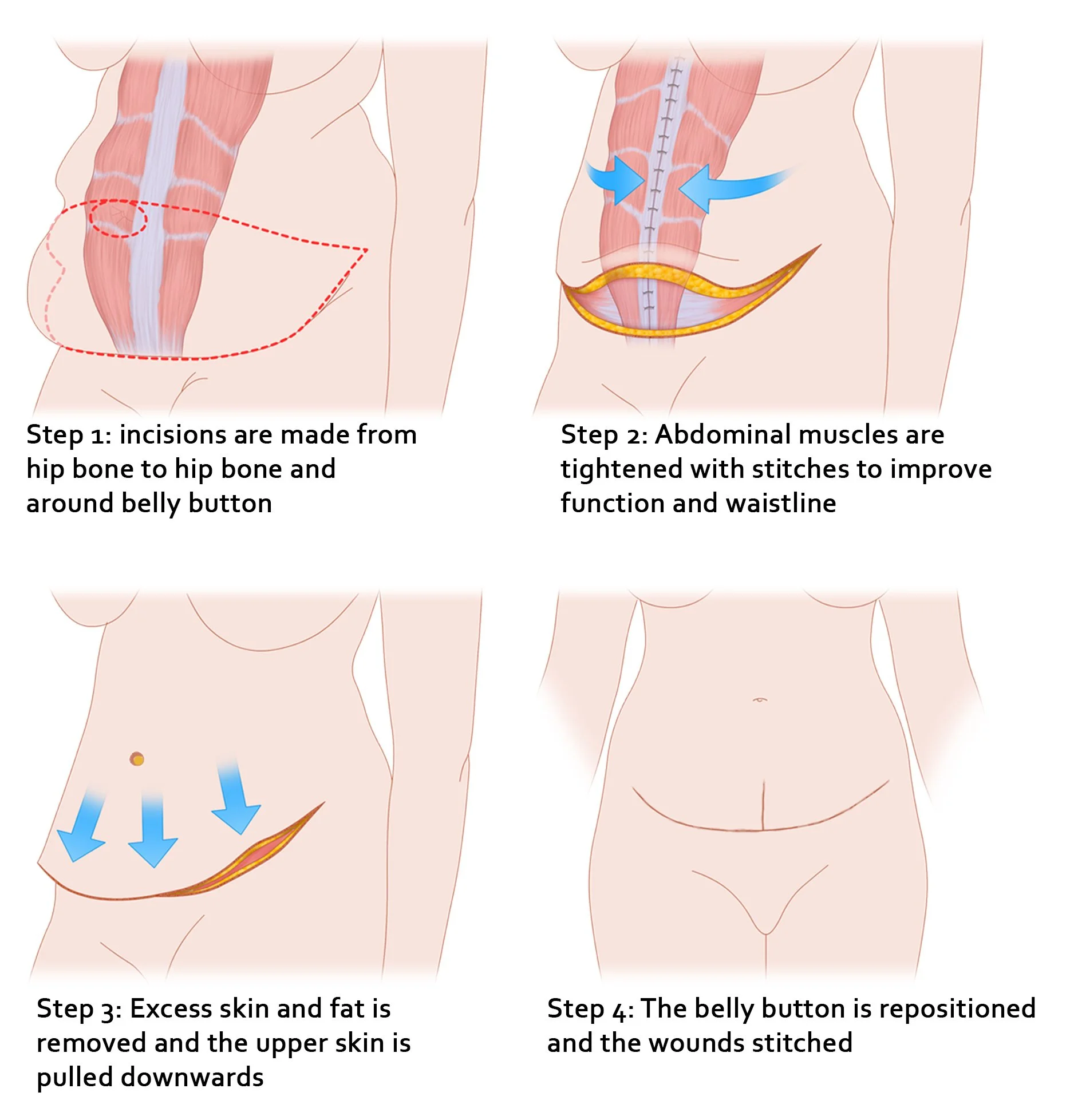
Commonly known as the “tummy tuck”, Abdominoplasty surgery can dramatically reduce the appearance of a protruding or flabby abdomen. This is a major surgical procedure which removes excess skin and fat from the middle and lower abdomen and tightens the muscles of the abdominal wall.
The most effective results are achieved in patients who are in overall good shape, but are bothered by loose abdominal skin that won’t respond to diet or exercise.
The surgery is particularly helpful to women who, through pregnancy/ies, have significantly stretched abdominal muscles and skin.

Surgery for Tummy Tuck (Abdominoplasty)
The surgery involves excision of the excess skin and fat below the belly button. In most patients, there is usually enough excess and loose skin that this can be excised and then the skin at the level of the belly button is re-draped to come down to meet the skin at the top of the pubic hair. This means most of the scar can usually be concealed below the bikini line.
The belly button stays where it is on the abdominal muscles and is brought out through the new skin position. This will leave a scar around the belly button.
Liposuction is usually carried out in conjunction with an abdominoplasty to help create a more balanced outcome. Liposuction helps to contour the abdomen mostly on the sides (hips and flanks) and also the upper abdomen.
NOTE: See Liposuction procedure page for more information on this surgery.
Your Recovery
Abdominoplasty surgery is performed under general anaesthetic, usually with a few nights in hospital followed by two to four weeks recovery time off work.
Wearing a supporting girdle during the recovery period helps optimise results and most patients are able to return to vigorous exercise after about six weeks.
NOTE: There is often a feeling of tightness in the lower abdomen and there is usually an area of diminished sensation for several months after surgery.
Risks of Abdominoplasty Surgery
Key risks specific for Abdominoplasty surgery are:
Seroma (excess blood accumulation under the skin that may require drainage)
Haematoma (excess blood accumulation beneath the skin that may require drainage)
Pain and discomfort around the incisions
Wound infection (treatment with antibiotics may be needed)
Visible and prominent scars including keloid and hypertrophic scars: raised, red scars that may form over the healed incisions.
Difficulty in bending forward and other movement due to the tightened skin
Additional general risks inherent in undergoing surgery and anaesthesia are explained at the time of consultation.
Frequently Asked Questions
-
Patients who benefit the most from a tummy tuck are bothered by the feeling that their tummy is too large but are realistic about their expectations from surgery. They are physically fit and healthy with a stable weight and are non-smokers or have stopped smoking.
-
If you may fall pregnant in future or plan to lose a lot of weight you should delay the procedure until your weight is likely to remain stable in the long term.
A tummy tuck is not a substitute for weight loss or an exercise program and we do point out to candidates to consider that whilst the results of the procedure are technically permanent, any result would be greatly diminished by significant future fluctuations in weight.
-
Patients who present with good abdominal tone and only moderate fat excess in the lower abdomen only, do not usually need a full tummy tuck as the abdominal muscles do not require repair.
A mini tummy tuck is where the upper abdomen and abdominal muscles are not operated on and the belly button does not need repositioning, thus, being less extensive.
Recovery periods and the scar are much shorter than for the full tummy tuck, but note that this procedure is not an option for most patients.
-
Although scars are the inevitable result of any surgery, every effort is made to make the scars as inconspicuous as possible. Usually, scars can be hidden inside the bikini line where they are easy to conceal.
-
Drains are plastic tubes sometimes inserted at the time of surgery to decrease the chance of fluid or blood collection in the wound post-surgery. We don’t usually use drains for tummy tuck surgery.
We have found that with meticulous control of bleeding at the time of surgery, drains are not required. When used, drains are uncomfortable and can be a contributing factor to increased stay in hospital.
-
Not necessarily. If your tummy tuck is considered medically necessary it will attract a medicare item number and then your health fund may provide cover for it. We can help you work this out once you have had your consultation.
-
Yes. You will be provided with a girdle to wear for approximately six weeks post-surgery.
-
Abdominoplasty surgery is performed under general anaesthetic, usually with a few nights in hospital followed by two to four weeks recovery time off work.
Wearing a supporting girdle during the recovery period helps optimise results and most patients are able to return to vigorous exercise after about six weeks.
NOTE: There is often a feeling of tightness in the lower abdomen and there is usually an area of diminished sensation for several months after surgery.
Glossary of Medical Terms
Abdominoplasty
The medical term for a “tummy tuck” – the surgical procedure to correct the apron of excess skin hanging over the abdomen
Liposuction
Also called lipoplasty or suction lipectomy, this procedure vacuums out fat from beneath the skin’s surface to reduce fullness
Diastasis
Condition in which abdominal muscles have separated
Pannus
A large apron of fat causing dermatitis, skin infection, &/or difficulty in walking
Apronectomy
A surgical procedure to remove a large apron of fat (pannus)
Haematoma
Excess blood accumulation beneath the skin
Seroma
Excess fluid accumulation under the skin

RANDWICK PLASTIC SURGERY