
Skin Cancer & Lesions
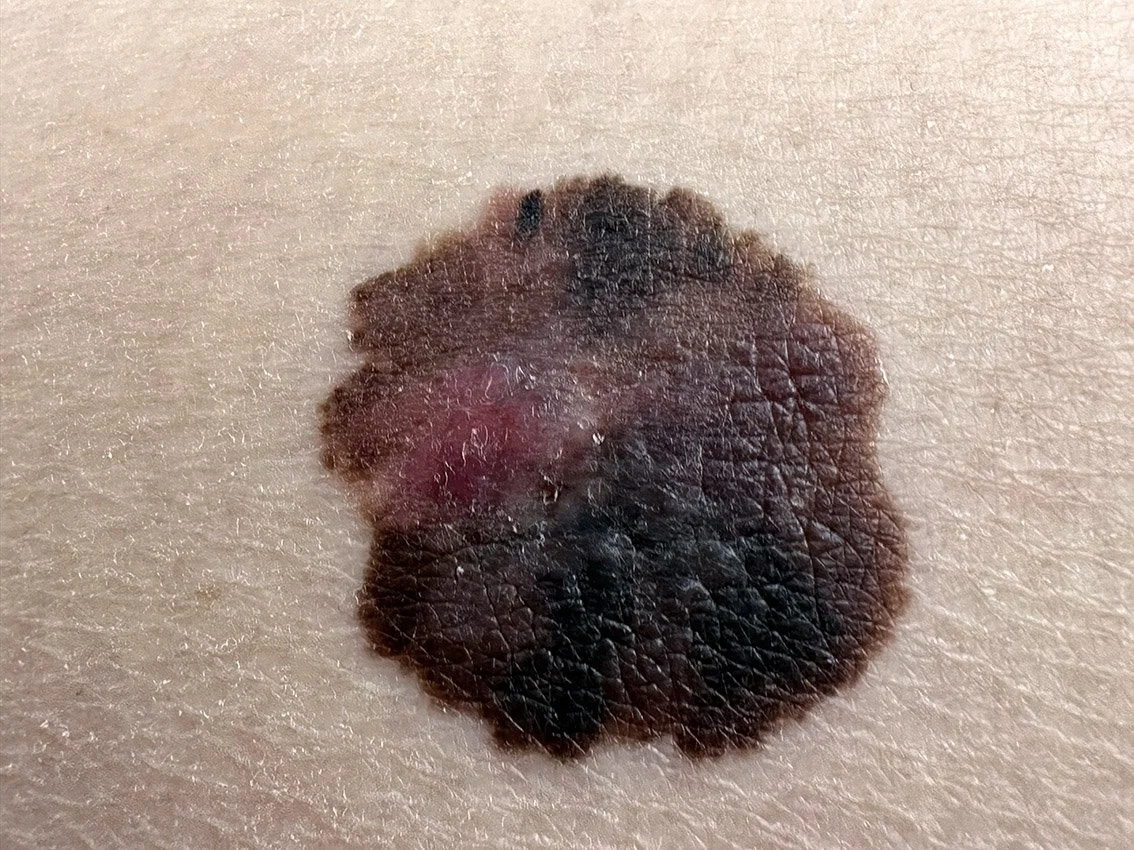
Skin lesions are a growth or blemish of the skin that can be either cancerous or non-cancerous.
The cancerous lesions Melanoma, SCC and BCC are of most concern and require timely removal whilst the usually harmless cysts, warts, birthmarks, moles and keratoses can often be removed or even left untreated if not causing discomfort and are not of cosmetic concern.
Whilst about 80 percent of lesions appear on the face, head, or neck, they can be found on any part of the body. Early identification of lesion type is crucial in ascertaining appropriate treatment.

Surgery for Skin Lesions
Small skin lesions can be excised and the wound directly closed with sutures under local anaesthetic at our onsite facility.
Larger more complex lesions and lesions on the leg in older frail patients are more likely to be removed in a hospital setting, usually as a day case. Larger lesions may also require a skin flap or skin graft to help fill the open wound remaining after excision of the lesion.
A skin flap is used when the anatomy allows the skin to be taken from adjacent to the wound but if this is not possible a skin graft from another part of the body is required.
Your Recovery
Most patients can return to normal activities the day following their procedure with some restrictions depending on the location of the lesion removed and the complexity of the surgery performed.
Following surgery, a dressing will be applied which will need to be kept clean and dry for 48 hours and a sample of your lesion will be sent to our pathologist for examination.
Your wound will be reviewed and stitches removed between 5 – 7 days for an excision on the face and 7 – 14 days for anywhere else on the body. At this time the pathologist report will be available and discussed with you.
Risks of Skin Lesion Surgery
Key risks specific to Skin Lesion surgery are:
Bleeding
Abnormal scarring
Changes in skin colour
Infection
Poor wound healing especially with skin grafts
Nerve damage
Recurrence of the lesion
Difficulty closing the wound
Additional general risks inherent in undergoing surgery and local anaesthesia are explained at the time of consultation.
Frequently Asked Questions
-
If you have a skin lesion then review by your GP or at a skin cancer clinic or dermatologist is warranted. If the doctor is concerned then they may suggest a biopsy, this is where some or all of the lesion is cut out and sent to the lab to be visualised under a microscope. The diagnosis is then made and treatment can be planned.
Some lesions are very typical of certain skin cancers and in these cases the doctor may recommend to excise the lesion without a prior biopsy being required.
-
This is very difficult to say without seeing the lesion. Your doctor will help you make this decision. Generally, if the skin lesion is not growing or changing with time then it is much less likely to be a cancer.
-
Most patients seek to visit a Plastic Surgeon to remove a lesion if it is important to them to obtain the best cosmetic outcome i.e. minimal scarring. This is more likely to be for lesions on the face or neck than say on the thigh.
A Plastic Surgeon is also required for larger lesions and more complex cancers requiring some form of reconstruction.
-
Once the wound has healed, we will prescribe a scar management regime for you to follow to attain the best scar outcome.
This is likely to involve a combination of wearing a skin-coloured tape to the scar, application of a silicone scar cream, massage and sun protection.
-
If you are in good health, you may be able to have a consultation and procedure on the same day. This is never necessary but often requested by patients to save their time and limit the number of visits required.
Staff will ask you a series of questions to ascertain if you are eligible for this at the time of booking your consultation.
Glossary of Medical Terms
Benign
Non-cancerous lesion
Keratosis
Non-cancerous excessive growth of keratin
Naevus
Non-cancerous mole or birthmark
Malignant
Cancerous lesion
BCC
Basal Cell Carcinoma – a type of skin cancer
SCC
Squamous Cell Carcinoma – a type of skin cancer
Melanoma
Cancerous lesion that develops from the pigment-containing cells known as melanocyte
Suture
A stitch
RANDWICK PLASTIC SURGERY