

Eyelid Surgery/Blepharoplasty
Blepharoplasty is the term for surgery to minimise bags and wrinkles around the eyes and/or correct drooping upper lids.
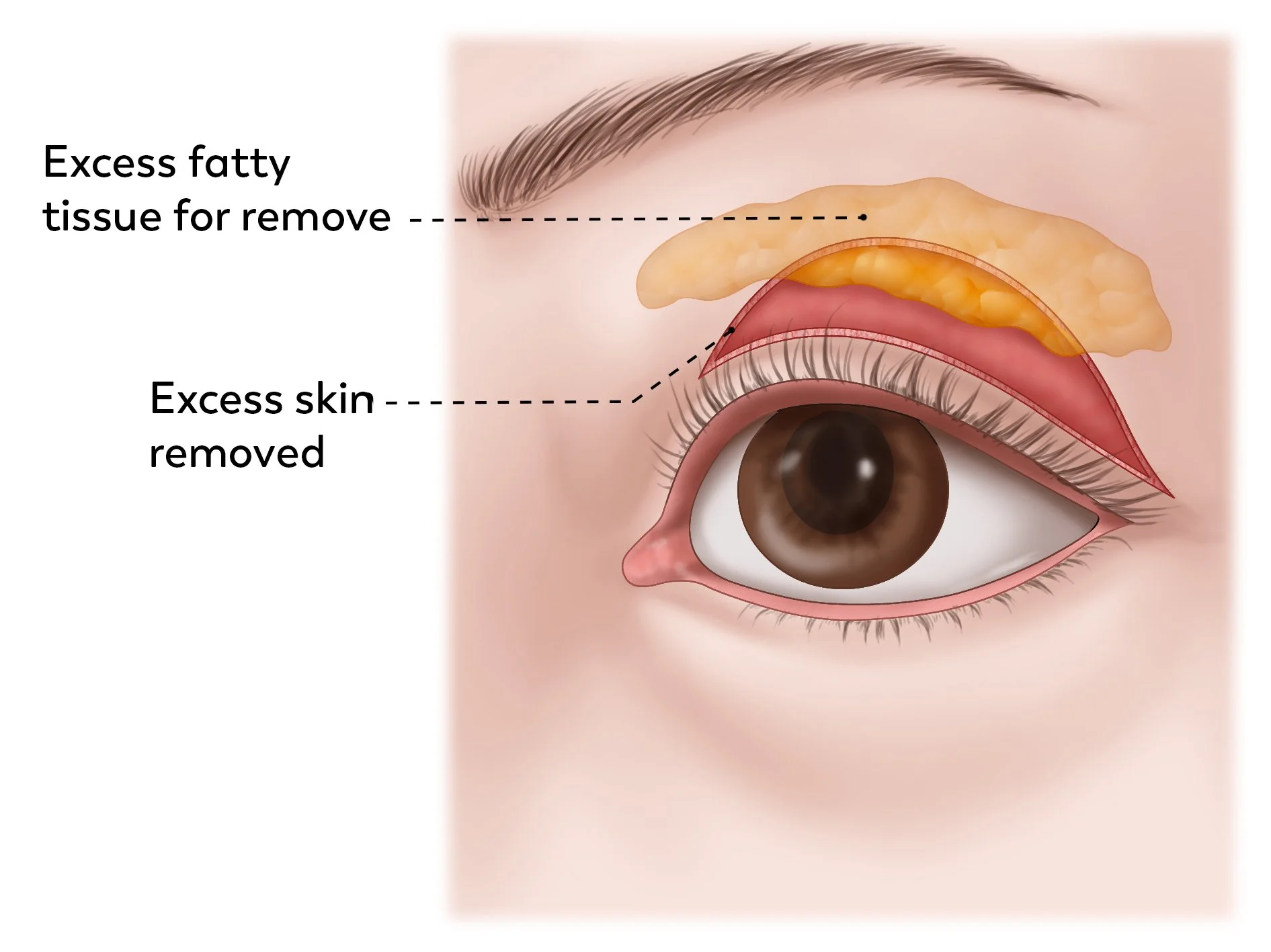
The procedure involves the removal of fat and excess skin from the upper eyelids.
What is Blepharoplasty Surgery?
For the upper blepharoplasty an area of excess skin and muscle is excised from the upper eyelids and we usually also excise a small amount of excess fat.
A better result is usually achieved when only small amounts of fat are removed – as excessive removal often leads to hollowing of the eyes which detracts from the results.
Wounds are closed with a running stitch which is removed one week later.
Your Hospital Stay
Blepharoplasty is usually performed as a day case under local or general anaesthesia. We will review your recovery and remove any surface stitches 5-7 days post-surgery.
Your Recovery
A return to work is usually possible after 7-10 days but note that bruising and swelling for up to 3 weeks can be expected.
Risks of Blepharoplasty Surgery
Key risks specific to Blepharoplasty surgery are:
Asymmetry of the eyelids
Abnormal drooping of the upper eyelids, folding in or out of the lower eyelids
Temporary blurred vision and very rarely, partial or complete blindness in the affected eye
Corneal abrasion, inflammation
Excessive tearing or dry, itchy eyes
Under or over-correction of the eyelids
Excessive scarring
Additional general risks inherent in undergoing surgery and anaesthesia are explained at the time of consultation.
Frequently Asked Questions
-
Sometimes. The medicare description requires that the upper lids are sufficiently lax and excess to be within the field of view in normal vision. We will assess if this is the case at the time of your consultation.
-
The major concern most patients have regarding the outcome of blepharoplasty is scarring. Although scarring is the inevitable result of any surgery, we are usually able to keep this to a minimum by making careful incisions along natural skin lines and creases where scars usually fade with time and become barely noticeable.
-
Yes, this is possible for upper blepharoplasty only. This procedure can be performed with local anaesthetic alone and thus can sometimes be undertaken in the rooms.
-
Blepharoplasty can reduce wrinkles in the eyelids and also partially the crow’s feet area. It does not affect wrinkles anywhere else.
Glossary of Medical Terms
Blepharoplasty
The medical term for ‘eyelid surgery’
Upper blepharoplasty
Surgery to the upper eyelid
Crow’s Feet
Wrinkles and fine lines that form around the outer corners of the eyes
RANDWICK PLASTIC SURGERY