
Breast Reduction
Women who require breast reduction surgery are usually troubled by breasts that restrict their activities, cause them discomfort and often leave them feeling self-conscious.
Whilst the reduction procedure does result in scarring of the breast skin, most patients are very satisfied with their result – as they no longer need to live with discomfort and can start to enjoy improved posture and confidence to go about a wider range of physical activity.
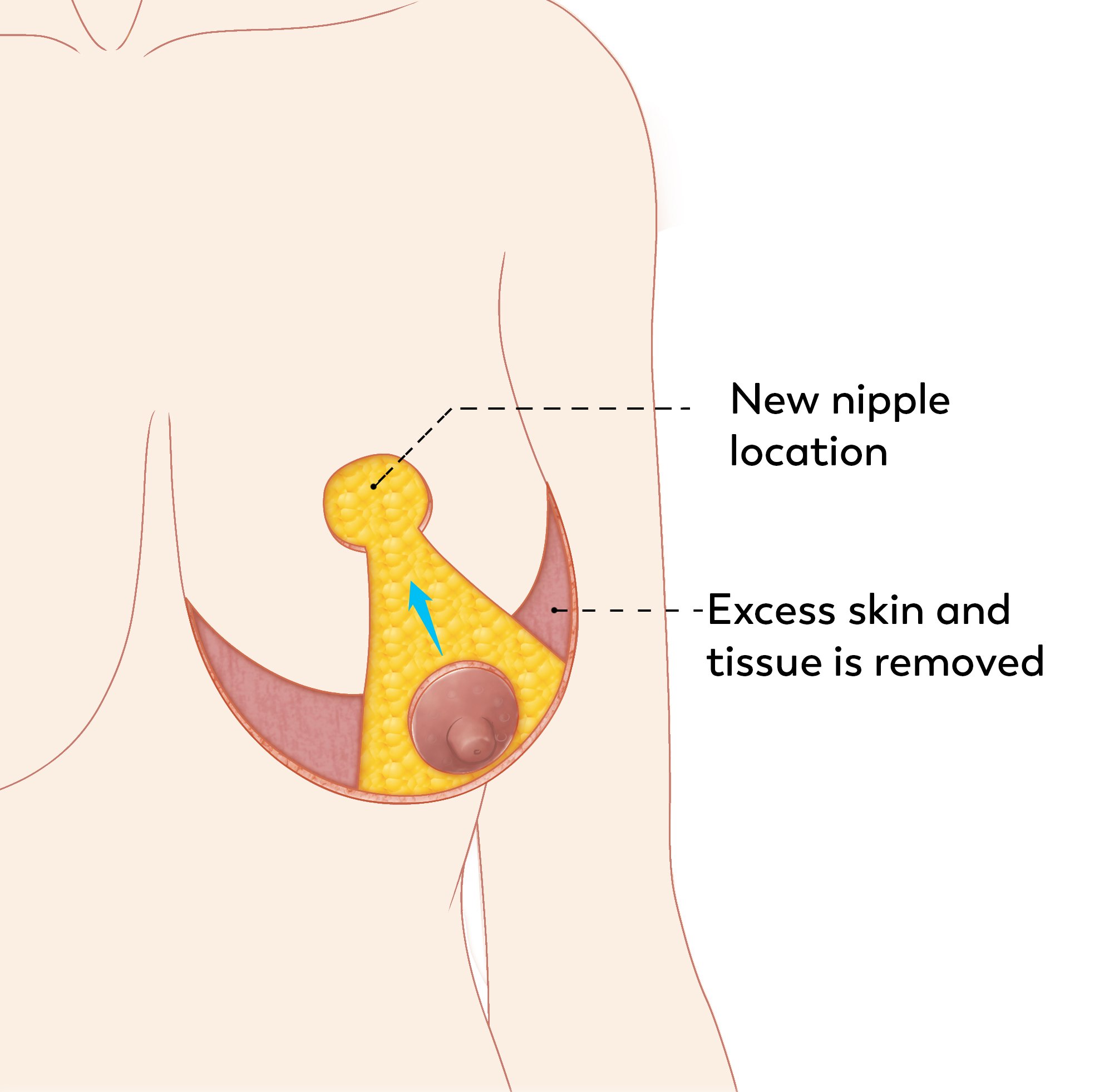
The reduction of breast size involves the removal of excess skin and breast tissue from around the nipple/areola.

Surgery for Breast Reduction
The “inferior pedicle” technique is used and modified for your size, shape and preferences in breast reduction. The nipple/areola is left attached to the chest wall maintaining its blood and nerve supply. The excess skin and breast tissue are excised from around the nipple/areola mound.
The inferior pedicle technique is suitable for most patients. This results in an inverted T-shaped scar with a horizontal scar along the line below the breast.
Your Hospital Stay
Breast reduction surgery is performed under general anaesthetic with a 1-3 night hospital stay.
Your Recovery
You will usually require 1-2 weeks off work to recover. Vigorous exercise can usually be resumed after about 6 weeks.
Risks of Breast Reduction Surgery
Key risks specific to Breast Reduction surgery include:
Asymmetry of the breasts
Breast pain
Inability to breastfeed
Decreased nipple-areola sensation
Loss of nipple-areola, skin loss – especially in smokers
Inverted nipple
Nipple-areola position too high/low
Additional general risks inherent in undergoing surgery and anaesthesia are explained at the time of consultation.
Frequently Asked Questions
-
Pain and discomfort from large breasts often occurs in the shoulders, lower neck and/or back and can be at its worst during physical activity. A breast reduction reduces, and usually eliminates this pain whilst helping to enhance posture, overall appearance and self-esteem.
-
Yes. There is evidence that obese women (BMI* over 30) who undergo breast reduction surgery have higher complication rates and wound healing problems.
*BMI is a ratio of weight in kg over height squared. The ideal female BMI is 20-25.
-
The goal of surgery is to reduce your breasts to a size that is in better proportion to your physique and makes you feel more comfortable.
-
Although scars will be present, most patients believe they are worth it due to the significant health and lifestyle benefits of having breasts that are in proportion to their physique. The scars are situated around the areolae of the nipple and under the breasts and usually become less visible over 6-12 months, especially if you comply with post-surgery scar management instructions. There are however a small number of patients that tend to develop thick scars which will not fade as well over time.
-
There is normally a slight difference in size between the breasts and this may persist following your procedure.
-
There will be some alteration in the sensation of the nipples post-surgery, but this often improves with time.
-
Possibly. There is still significant breast tissue remaining post-surgery so it is possible for most women. A lot of large-breasted women struggle to breastfeed. The evidence suggests that 1/3 of women breastfeed fully, 1/3 partially and 1/3 not at all and that these figures are similar after breast reduction surgery.
-
Breast reduction surgery is performed under general anaesthetic with a 1-3 night hospital stay followed by 1-2 weeks off work to recover. Vigorous exercise can usually be resumed after about 6 weeks.
Glossary of Medical Terms
Mammoplasty
Plastic surgery of the breast
Reduction mammoplasty
Breast reduction surgery
Inferior pedicle / Anchor / Inverted T technique
3 different names for the breast reduction technique that results in an inverted “T” scar down from the nipple to the underside of the breast
Vertical scar technique
The breast reduction technique is possible for some small to medium breast reductions that result in a scar from the underside of the nipple down to under the breast but which does not result in a horizontal scar under the breast

RANDWICK PLASTIC SURGERY