
De Quervain’s Tendonitis
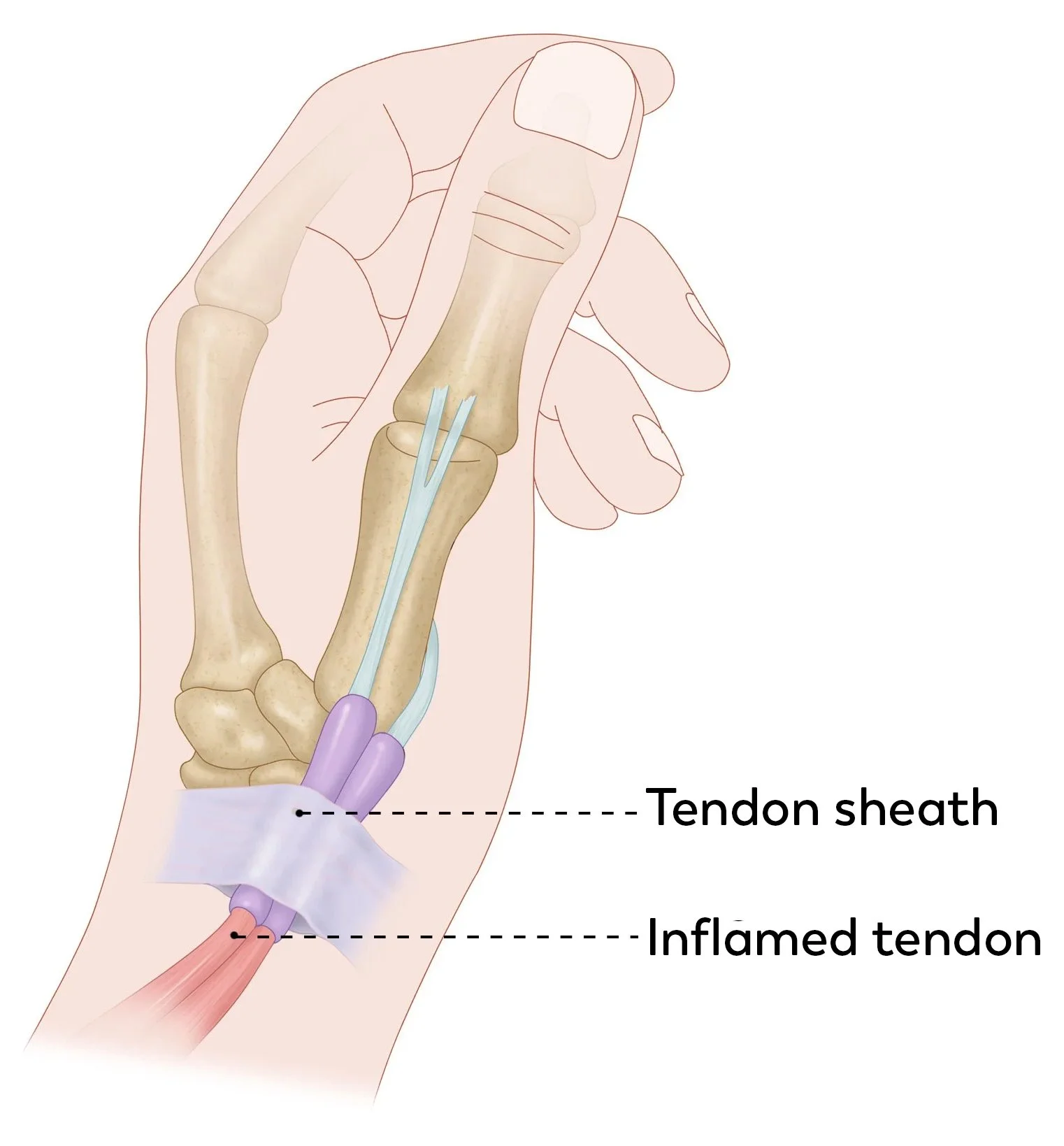
De Quervain’s tendonitis is the medical term for pain arising on movement of the thumb and wrist due to irritation of the tendons at the base of the thumb. Common painful movements include making a fist and grasping or holding objects.

Non-surgical treatment
In some cases, simply stopping the aggravating activities may relieve symptoms. If this does not occur we usually recommend the following non-surgical treatment options prior to considering surgery:
wearing a splint to rest the thumb and wrist
oral anti-inflammatory medication
cortisone injections around the tendons
These treatments can help reduce the swelling, which can relieve pain over time.
If symptoms continue and are severe, surgery is usually then recommended.
Surgery
Surgery involves releasing the tight fibrous tissue around the irritated tendons giving them more room to eliminate the pain and prevent irritation from recurring.
Your Hospital Stay
Surgery is usually performed as day surgery and normal use of the hand can usually be resumed within a few weeks.
Your Recovery
There is some pain during the recovery period. No splint is required.
Risks of De Quervain’s Tendonitis Surgery
Key risks specific to De Quervain’s surgery are:
injury to the arteries of the fingers/hand
nerve damage causing weakness or loss of feeling in the hand area
Additional general risks inherent in undergoing surgery and anaesthesia are explained at the time of consultation.
Frequently Asked Questions
-
The main symptom is pain over the thumb-side of the wrist which may come on gradually or suddenly and may radiate down the thumb or up the forearm.
There may be increased pain with hand and thumb motion, leading to difficulty with pinch activities.
Other symptoms include swelling at the site of pain, ‘clicking’ or ‘snapping’ and numbness on the back of the thumb and index finger.
-
The cause of the irritation of the tendons is usually repetitive activity.
New mothers are prone due to the hand positioning associated with caring for an infant, and the hormonal fluctuations of pregnancy and nursing.
Other causes include wrist fractures, diabetes and some types of inflammatory arthritis.
-
Rest and elevation of the hand is important and will also help reduce discomfort. If fitted with a sling, take your arm out of the sling hourly to exercise your shoulder and elbow so they do not become stiff.
If your fingers and thumb are not in the splint, they should be moved regularly as well. At night sleep with your arm propped up on pillows next to you.
Glossary of Medical Terms
De Quervain’s tendonitis/disease: Inflammation of tendons that often causes pain in the thumb side of the wrist

RANDWICK PLASTIC SURGERY