
Gynaecomastia
Gynaecomastia refers to the development of enlarged breast tissue in one or both breasts in a male. Although certain drugs, obesity and medical problems have been linked with male breast overdevelopment, there is no known cause in the vast majority of cases.
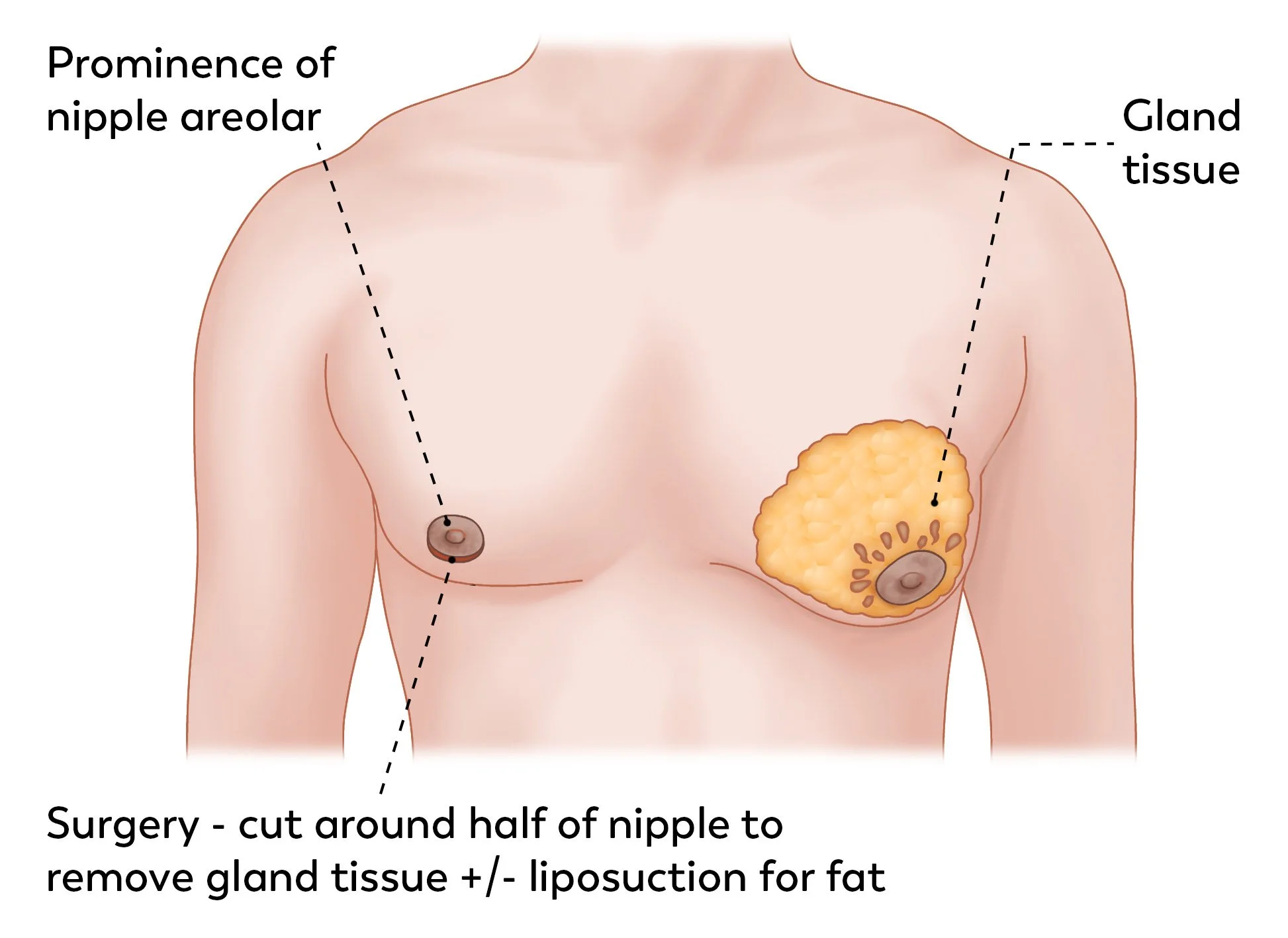
It is a common condition that can be embarrassing but is usually of aesthetic concern only as it is very rare that the excess tissue is cancerous. In the vast majority of cases, there is no known cause of gynaecomastia. In severe cases of gynaecomastia, the weight of excess breast tissue may cause the breasts to sag and stretch the dark skin surrounding the nipple (the areola).

Surgery for Gynaecomastia
Plastic surgery to correct gynaecomastia involves liposuction and/or excision of excess tissue – this reduces breast size, flattening and enhancing the chest contours. Excess fatty tissue is removed by liposuction and excess glandular tissue is excised. If a lot of tissue has been removed, excess skin on the chest wall may also be removed to restore the appearance of a flat chest. The wound is then closed with fine-dissolving stitches. Initially, a scar is visible around the areola which usually heals very well.
Your Hospital Stay
Gynaecomastia surgery is performed under general anaesthetic, often in day surgery and occasionally with an overnight stay.
Your Recovery
Time off work to recover is usually 1-2 weeks and vigorous exercise can usually be resumed after 6 weeks.
Risks of Gynaecomastia Surgery
Key risks specific to Male Gynaecomastia surgery are:
Asymmetry of the breasts
Decreased nipple-areola sensation
Recurrence of breast growth
Fat necrosis
Permanent pigment changes
If liposuction is used – uneven contour, rippling or loose skin
Additional general risks inherent in undergoing surgery and anaesthesia are explained at the time of consultation.
Frequently Asked Questions
-
Gynaecomastia surgery can be very rewarding for patients who are bothered by their overdevelopment of breasts and who:
are physically healthy and of relatively normal weight
do not smoke or use drugs
have realistic expectations from the surgery
-
Adolescents may benefit from surgery, although secondary procedures may be needed in the future if breast development is not complete at the time of the procedure.
-
Any surgical treatment to correct gynaecomastia will require incisions and while most incision lines are concealed within the natural contours of the skin, some may be visible post-surgery.
-
Gynaecomastia surgery is performed under general anaesthetic, often in day surgery and occasionally with an overnight stay. Time off work to recover is usually 1-2 weeks and vigorous exercise can usually be resumed after 6 weeks.
Glossary of Medical Terms
Gynaecomastia
The development of excess breast tissue in a male
Areola
Dark skin surrounding the nipple
Glandular Tissue
Tissue present in the breast that is designed to secrete hormones
Liposuction
Insertion of thin hollow suction tubes through several small incisions in the skin. Moving back and forth the tubes in a controlled motion loosens excess fat which is then removed from the body by vacuum suction
RANDWICK PLASTIC SURGERY