
Trigger Thumb
Trigger thumb in children occurs within the first year of life, but is often not noticed until the child is older.
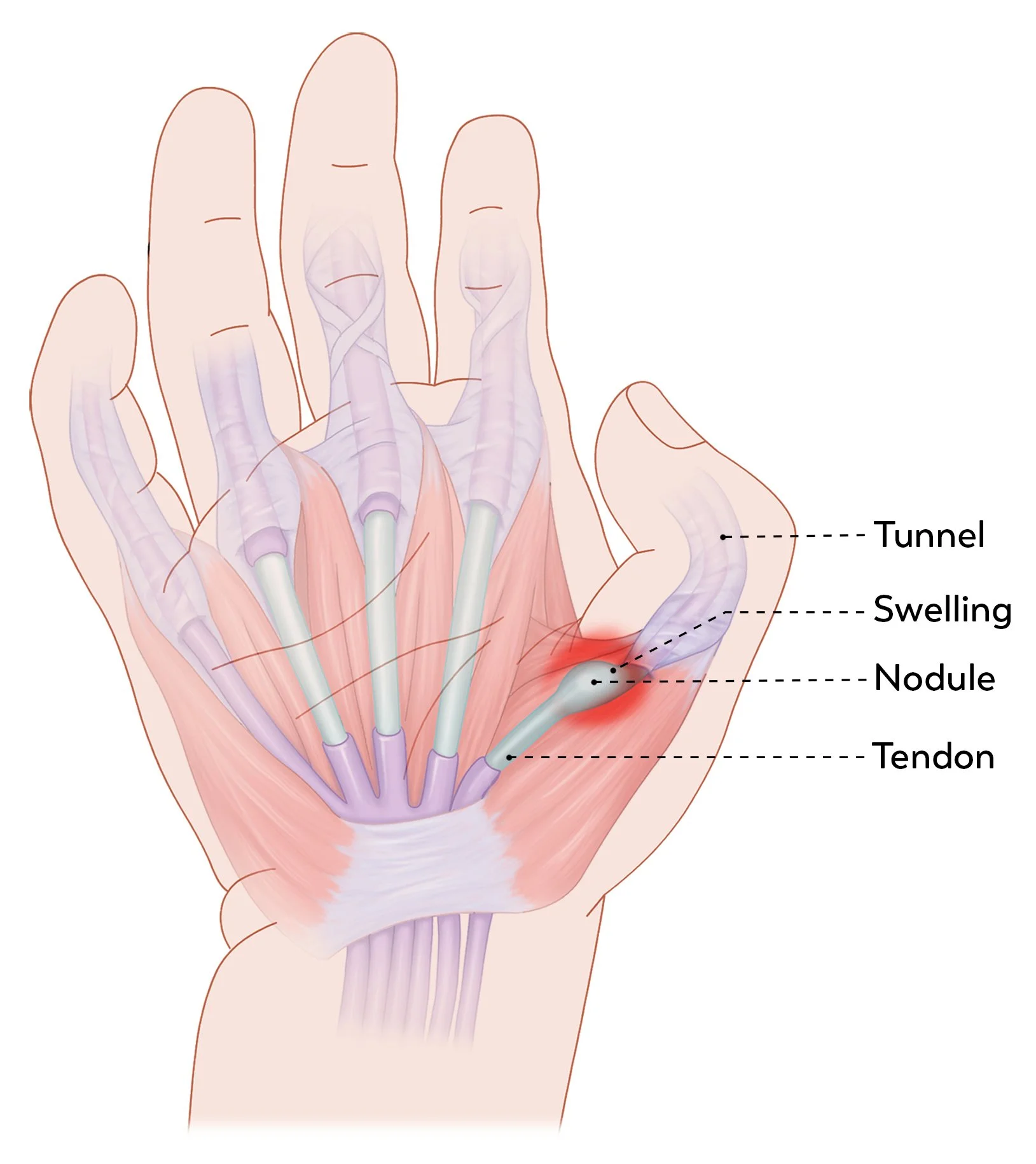
In approximately ⅓ of children with trigger thumb, it gets better by the age of 18 months. There is a swelling that can be felt at the base of the thumb.
The thumb sometimes clicks, which can cause mild discomfort, but is not otherwise painful. The thumb may also get stuck in a bent position.
It is not known exactly why it occurs, but is thought to be a size mismatch between the flexor tendon of the thumb and the A1 pulley, a fibrous band under which the tendon glides.
When the A1 pulley is too tight, the tendon becomes irritated leading to triggering.

Non Surgical Treatment
Trigger thumb may resolve spontaneously but this is very unusual after one year of age. Surgery is usually recommended for children over the age of one year. This involves the release of the A1 pulley.
Surgery
Surgery is by an incision at the base of the thumb.
The pulley is visualised and divided, allowing the tendon to move freely.
Recovery
The vast majority of infants make a quick recovery and complications are unusual.
The procedure is usually performed in a hospital as a day surgery under general anaesthetic. A bulky dressing is applied after surgery which is usually left intact for up to 2 weeks. No splints are required.
Risks of Trigger Thumb Surgery
Key risks specific to Trigger Thumb surgery are:
weakness of the hand due to injured tendons or nerves
recurring or worsening symptoms
numbness in hand
Additional general risks inherent in undergoing surgery and anaesthesia are explained at the time of consultation.
Frequently Asked Questions
-
Surgery should be considered after one year of age as occasionally the condition resolves itself spontaneously up until the age of one, but this is very unlikely to occur after the age of one.
-
No. Although trigger thumb is often called congenital, evidence suggests that it does not appear at birth.
-
Approximately one-quarter of infants who have trigger thumb have it in both hands.
-
A resumption of triggering after surgery is very unusual.
Glossary of Medical Terms
Stenosing Tenosynovitis: Trigger thumb (or finger)
Synovectomy: Removal of tissue
Node: Swelling or enlargement involving a mass of tissue
RANDWICK PLASTIC SURGERY