
Carpal Tunnel Syndrome (CTS)
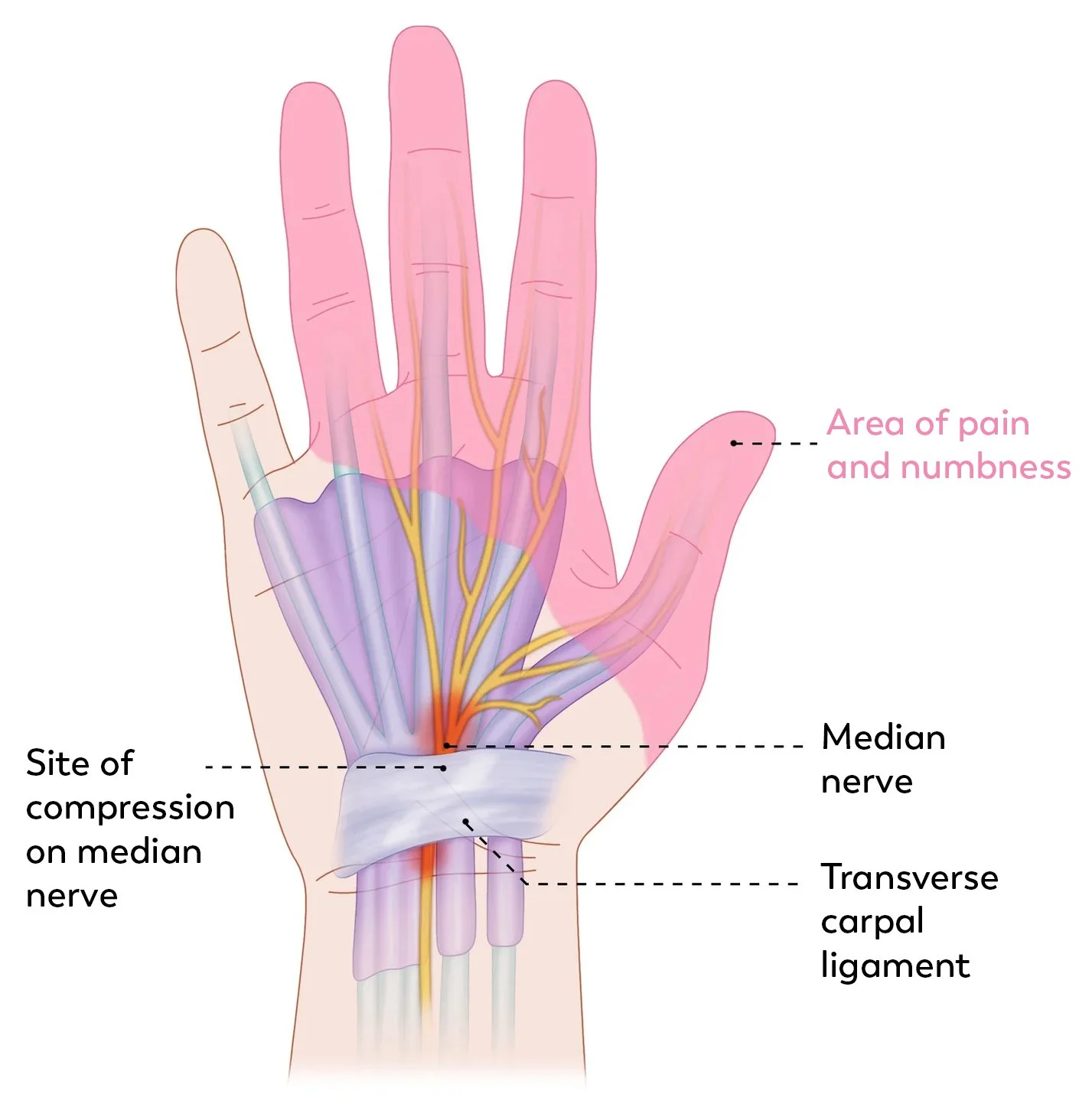
The carpal tunnel is a relatively small space in the wrist through which 9 tendons and the median nerve pass into the hand. Carpal Tunnel Syndrome (CTS) is caused by pressure on the median nerve in the carpal tunnel at the wrist.
Carpal Tunnel Syndrome (CTS) affects roughly 2.7% of the population. It’s more prevalent in women than men. The typical age range for those diagnosed is between 40 and 50 years.

Conservative Non-Surgical Treatment
CTS is usually managed by nonsurgical means initially.
This may give significant or complete relief, meaning surgery is not necessary.
Non-surgical treatments include:
Activity modification
Weight loss and exercise
Splint – usually at night
Steroid injection
Anti-inflammatory drugs
Ice to reduce swelling
If symptoms persist and non-surgical means are not effective, then surgery is usually considered.
Carpal Tunnel Release Surgery
Carpal tunnel release surgery is performed to relieve the symptoms of carpal tunnel syndrome. Surgery to release CTS can be performed under general or local anaesthetic and is performed as a day surgery procedure in a hospital. At surgery, the transverse carpal ligament is divided. This is the ‘roof’ of the carpal tunnel and division of it creates more space, thus relieving pressure on the median nerve and releasing the carpal tunnel.
The surgery can be performed by either open or endoscopic (keyhole) technique. Results are generally the same for both procedures six months after surgery.
Recovery is quicker with the keyhole technique because it requires smaller incisions in the skin but not every patient is appropriate for keyhole surgery.
Your Recovery
The wound usually heals quickly and symptoms are often relieved within the first few weeks. However, any altered sensation can take many months to recover if it was present night and day prior to surgery. The dressing is kept in place for 7-10 days post-surgery and patients can use their hands for gentle activities in the few weeks post-surgery.
The following may be advised postoperatively to aid healing and recovery:
Physical therapy
Wearing of a splint
Ice packs to reduce swelling
Keeping your wound clean and dry and wearing a plastic covering in the shower or bath.
Risks of Carpal-Tunnel Surgery
Surgery to release CTS has a low complication rate. However, complications do exist and include:
Loss of muscle bulk at the base of the thumb may never recover
Pillar pain – pain at the base of the hand, and weakness (usually temporary but may persist)
Hypersensitive or painful scar
Nerve injury
Recurrent or persistent CTS
Complex regional pain syndrome (<1%)
Additional general risks inherent in undergoing surgery and anaesthesia are explained at the time of consultation.
Frequently Asked Questions
-
If symptoms are mild, there may be no adverse outcome from no treatment. However, persistent and more significant symptoms may lead to permanent nerve damage, which can cause permanent loss of feeling and loss of function in the muscles that work the thumb.
Symptoms are often worse at night and may be relieved by shaking or dangling the hand out of the bed.
-
Not every patient is appropriate for keyhole surgery. This will be assessed and discussed at your consultation.
-
This nerve supplies some muscles that work the thumb, and give sensation to the thumb, index, middle and ring fingers.
-
The roof of the carpal tunnel.
-
The release is performed by making an incision in the palm.
-
When the release is performed by ‘keyhole’ surgery. 2 small incisions are made and a camera is used to guide the surgery.
Glossary of Medical Terms
Carpal tunnel
A relatively small space in the wrist through which 9 tendons and the median nerve pass into the hand.
Carpal tunnel release
Surgery to relieve the symptoms of carpal tunnel syndrome.
Median nerve
Supplies some muscles that work the thumb, and give sensation to the thumb, index, middle and ring fingers.
Transverse carpal ligament
The roof of the carpal tunnel.
Open CTR
The release is performed by making an incision in the palm of the hand.
Endoscopic CTR
When the release is performed by ‘keyhole’ surgery. 2 small incisions are made and a camera is used to guide the surgery.
RANDWICK PLASTIC SURGERY